This is what makes cell site analysis (CSA) one of the most consequential tools in modern digital investigations. It's also one of the most frequently misunderstood. Prosecutors present carrier maps as though they're GPS tracks. Defense teams sometimes fail to challenge coverage assumptions that are factually unsupportable. Juries receive opinion evidence framed as objective fact.
This guide explains what CSA actually is, how it works, what it can and cannot prove, and why qualified expert interpretation isn't optional—it's essential.
Key Takeaways
- CSA is carrier-record analysis, not GPS—it identifies a general area where a device was active, not a precise point
- CDRs are held by the carrier, not the device; users cannot delete them, and they survive the phone being wiped or destroyed
- Carpenter v. United States (2018) established that law enforcement generally needs a warrant for historical CSLI
- Coverage ranges from 1/8 to over 20 square miles depending on urban density, terrain, and technology
- Carrier retention windows range from one to five years by provider, making early preservation requests critical
What Is Cell Site Analysis?
Cell site analysis is the forensic methodology of examining Call Data Records (CDRs) — logs mobile carriers generate each time a phone interacts with their network — to infer the general geographic area where a device was located at a given time.
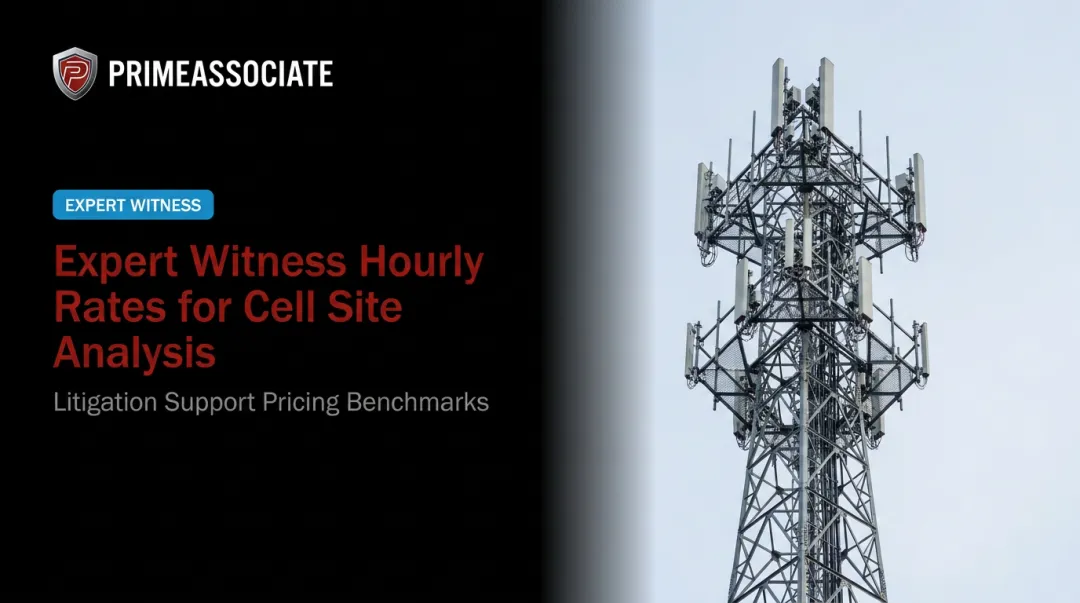
In the US, this data is formally called Cell Site Location Information (CSLI). As the Supreme Court described in Carpenter v. United States, 585 U.S. 296 (2018), CSLI is a time-stamped record created when a phone connects to a cell site (radio antennas mounted on towers, buildings, or other structures).
Carriers collect and retain this data for their own operational purposes: identifying network weak spots, calculating roaming charges, and managing billing.
What CDRs Actually Contain
A standard CDR entry includes:
- Date, time, and duration of the event
- Type of event (voice call, SMS, data session)
- Phone numbers involved
- The cell site and sector used at the start and end of the connection
CSLI is not the content of calls or messages. It's metadata about the connection itself. Analysts work entirely at this metadata layer and do not need physical access to the device.
The Three Data Layers in Mobile Evidence
| Data Type | Source | What It Shows |
|---|---|---|
| Device download | The phone itself | Messages, call logs, app data, deleted content |
| Carrier billing records | Carrier | Call/SMS history, data usage |
| CDRs with cell site data | Carrier | Network connection events + tower/sector used |
CSA focuses exclusively on the CDR layer. Voice call and SMS records are generally the most straightforward to interpret.
One important caution: GPRS and data session records present additional challenges. SWGDE's methodology guidance notes that data-session records require provider-specific interpretation and cannot always be taken at face value for timing or location purposes.
How Cell Site Analysis Works – Step by Step
The process moves from legal data acquisition through to expert opinion. Each stage introduces its own uncertainty, and errors at any step can compromise the integrity of the analysis.

Step 1 – Legal Data Acquisition
In the US, obtaining historical CSLI from a carrier requires a search warrant, following the Supreme Court's 2018 ruling in Carpenter v. United States. Law enforcement submits the warrant to the carrier, who returns CDRs typically in raw CSV format.
A critical point for defense attorneys and independent experts: the raw, unaltered data file must be obtained—not a PDF export, not a filtered summary. Any modification to the data before analysis reduces its evidentiary reliability and can compromise chain of custody.
Step 2 – Parsing the Call Data Records
Analysts load the raw CDRs into specialist software to map each communication event to its corresponding cell site and sector. Each site has a unique Cell ID. Directional antennas typically divide coverage into 120-degree sectors (sometimes 60-degree), so each record reflects not just a tower, but a specific directional arc of coverage.
Step 3 – Establishing Cell Coverage via RF Survey
Radio Frequency (RF) surveys involve driving or walking routes with specialized equipment to measure which cells provide live coverage at locations of interest—the crime scene, a defendant's home, an alibi address. This step validates what the CDRs imply.
Key limitations to understand:
- Surveys are conducted after the fact, sometimes months or years later
- They capture coverage at street level, which may not reflect indoor signal behavior
- Cell sites may have been decommissioned, upgraded, or reoriented since the incident date
Step 4 – Building the Location Timeline
CDR events combined with coverage data produce a movement picture: not a GPS track, but a sequence of geographic areas where a device was active. Multiple events across a short time window can narrow the assessed area considerably.
This stage also supports co-location analysis—determining whether two devices consistently used the same cell sectors across time and geography. When they do, it suggests the devices (and their users) were in the same area.
Step 5 – Expert Interpretation and Reporting
Because cell data inference is opinion evidence—not factual output from a machine—it must be produced by a qualified expert witness. In US federal courts, the Daubert standard requires trial judges to screen expert testimony for reliability, considering factors like testability, known error rates, and general acceptance.
Presenting maps and tables to a jury as "factual"—without expert opinion framing—bypasses this requirement entirely. Courts have pushed back hard on this practice. In United States v. Evans, the court admitted historical cell-site evidence but excluded untested "granulization" opinions that overstated location precision. The takeaway for attorneys: unqualified precision claims are the most common point of attack when challenging cell site evidence.
What Cell Site Analysis Can and Cannot Prove
The Core Limitation: Area, Not a Point
CSA identifies a coverage area. Carpenter describes urban cell-site sectors as covering 1/8 to 2 square miles. DOJ guidance notes that a rural tower may cover more than 20 square miles. Tower density, terrain, building density, and network technology (2G vs. 4G vs. 5G) all affect how large or small that area is.
Treating CSA output as equivalent to GPS coordinates is scientifically unsupportable. Courts have been consistent in requiring analysts to clearly distinguish area-level inference from point-level precision.
The Attribution Problem
Location accuracy, however, is only one limitation. Even a precisely scoped coverage area tells you where a phone was — not who was holding it. Investigators bridge the identity gap through secondary evidence:
- Home cell analysis (identifying the tower the phone typically uses overnight)
- Contact pattern analysis with known numbers
- IMEI tracking across SIM swaps
- ANPR or CCTV correlation at tower coverage locations
What CSA Can and Cannot Reliably Support
CSA can support:
- Placing a device in a broad area consistent or inconsistent with an alleged location
- Detecting movement between cities or regions
- Identifying SIM swaps through IMEI analysis across CDR records
- Co-location inference when two phones share cell sectors across time
CSA cannot reliably prove:
- Exact location or route (phones don't always connect to the nearest tower—network load, building attenuation, and handover logic all intervene)
- Identity of the person using the device
- Precise timing when relying on GPRS/data session records
- Coverage at the time of the incident, if no contemporaneous RF data exists and the network has since changed

Where Cell Site Analysis Is Used
CSA applies across both criminal and civil proceedings — anywhere a person's location at a specific time is in dispute or needs corroboration.
Criminal Investigations
CSA appears most often in serious criminal matters where movement evidence is central:
- Homicide and violent crime (placing a suspect near a scene)
- Drug trafficking and organized crime (establishing travel routes and meeting points)
- Human trafficking (tracking movement patterns across jurisdictions)
- Multi-defendant cases where co-location or alibi refutation is disputed
Civil Litigation and Corporate Matters
This application is frequently underestimated. CSA has legitimate and growing use in:
- Family law disputes — confirming or contesting location claims in custody matters, or establishing contact in restraining order cases
- Corporate misconduct investigations — verifying where an employee was during an incident, termination dispute, or policy violation
- Insurance fraud defense — cross-referencing claimed accident or injury locations against carrier cell data
Note for civil practitioners: The Stored Communications Act (18 U.S.C. § 2702) restricts carriers from producing non-public records in response to civil subpoenas without proper authorization. Civil access to CSLI is legally constrained — not a routine subpoena exercise — and requires careful navigation before expert analysis can begin.
How Prudential Associates Can Help with Cell Site Analysis
Prudential Associates has provided forensic consulting services since 1972, serving attorneys, law enforcement agencies, government entities, and corporate clients across the country. CDR and cell site analysis is among the firm's most frequently engaged forensic disciplines—handled by a dedicated team with direct courtroom experience.
Relevant Certifications and Expertise
The team holds certifications directly applicable to CSA work:
- GIAC Advanced Smartphone Forensics (GASF)
- Certified Mobile Forensics Examiner (CMFE)
- Cellebrite Certified Mobile Examiner (CCME)
Several examiners are former law enforcement professionals, which means they understand how carrier records are used operationally and how they'll be scrutinized in court. That operational background directly informs how findings are framed for judges, juries, and opposing counsel.
What the Engagement Covers
Prudential Associates handles CSA engagements across the full workflow:
- CDR analysis: Parsing raw carrier records to identify communication patterns, geolocation data, and behavioral anomalies across voice, SMS, and data activity
- Timeline reconstruction: Synchronizing CDR events with other evidence to confirm or challenge alibis and claimed locations
- Pattern analysis: Using specialist software to surface hidden patterns in large datasets, including co-location analysis across multiple devices
- Independent review: Examining prosecution or plaintiff CSA reports to identify overstatement, missing RF validation, or methodological gaps
- Expert witness testimony: Providing court-admissible reports and testimony at the state and federal level, with findings supported by industry-standard methodologies

Prudential Associates works with both plaintiff and defense counsel, as well as corporate clients conducting internal investigations. The litigation support team can also assist during the initial case assessment phase: reviewing existing discovery materials and advising on the strength or weakness of cell site evidence before committing to a full engagement.
Act Early: Retention Windows Are Real Deadlines
Carrier CDR retention varies significantly:
| Carrier | CSLI/CDR Retention |
|---|---|
| AT&T | Up to 5 years |
| T-Mobile | Up to 24 months |
| Verizon | Up to 1 year (cell site/sector data) |
Once records are gone, they're gone. Early engagement of a qualified expert ensures the correct data is identified, preserved, and reviewed before retention windows close. Contact Prudential Associates at 301-279-6700 to discuss your case.
Frequently Asked Questions
What is cell site data (CSLI)?
CSLI (Cell Site Location Information) is the record a mobile carrier generates each time a device connects to its network, capturing the cell tower and sector used, along with the date, time, and event type. Under Carpenter v. United States (2018), law enforcement generally needs a warrant to obtain historical CSLI from a carrier.
How accurate is cell site analysis?
CSA identifies a general area, not a precise location. Urban sectors typically cover 1/8 to 2 square miles; rural towers may cover more than 20 square miles. Accuracy depends on tower density, terrain, device technology, and whether an RF survey has validated the coverage assumptions used in the analysis.
What is a cell site analyst?
A cell site analyst is a forensic expert trained to interpret CDRs and translate raw carrier data into location assessments with documented uncertainty ranges. In US court proceedings, analysts providing location inferences must qualify as expert witnesses under the Daubert standard, as opinion evidence requires expert framing, not just map exhibits.
How do investigators analyze a tower dump?
A tower dump is a bulk request to a carrier for all device identifiers (IMEIs and phone numbers) that connected to a specific cell during a defined time window. Investigators cross-reference that list against known suspects and eliminate unrelated devices to narrow a suspect pool. Courts have flagged overbreadth concerns, as such requests can expose hundreds or thousands of identifiers belonging to non-suspects.
Are phone records from mobile carriers reliable evidence?
CDRs are generally considered reliable because they're independently generated business records not controlled by any party to the case. Their evidential value depends entirely on interpretation — raw records presented without qualified expert analysis can mislead a jury and are increasingly vulnerable to Daubert challenges.
What can forensic analysis recover from a phone?
Device-level forensics can recover deleted messages, call logs, app data, photos, and location history stored on the device itself. CSA is different — it relies on carrier records and doesn't require the phone at all. The two are complementary: device forensics provides content and on-device context; CSA provides network-level location evidence independent of the device.